
Press
Opinion: Another Voice: New York can stop landfills from polluting our Great Lakes by Buffalo / Niagara Waterkeeper
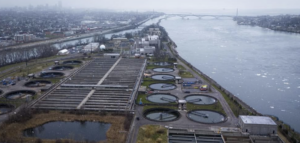
“This ‘garbage juice,’ formally known as leachate, is often a harmful cocktail that can contain pollutants like PFAS ‘forever chemicals,’ heavy metals, and pesticides. This leachate is then shipped to numerous wastewater treatment plants, like Bird Island in Buffalo, that utilize biological treatment processes and do not have the technology to remove PFAS and other chemicals from the liquid waste. Ultimately, PFAS contamination is pushed through the treatment system and ends up in the Niagara River and Great Lakes, the same sites where we pull our drinking water.”
The Buffalo News – 9/8/26 – Read more…

Consultant says Seneca Falls should revisit leachate agreement with SMI
“Coia spoke to the Town Board at its Sept. 1 meeting, saying the state’s largest landfill produces roughly 55 million gallons of leachate a year. Leachate is the liquid that is created when water flows through the buried waste material in the landfill and picks up contaminants before being collected at the bottom for either on-site or off-site treatment, after which it is discharged into a body of water.”
The Finger Lake Times – 9/4/26 – Read more…
Closing the ‘Leachate Loophole’
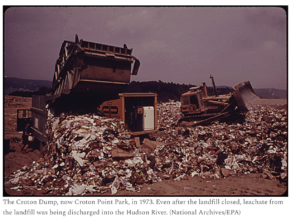
“The proposed state regulations would require the construction of leachate-processing plants. But NYRW says the proposal applies only to leachate from active landfills, even though 45 of the 75 that ship leachate statewide are inactive. The group also argues that the regulations cover only a handful of PFAS compounds, and that it isn’t clear what is allowed for leachate after processing.”
The Highlands Current – 8/21/26 – Read more…
The U.S. Has A Landfill Problem
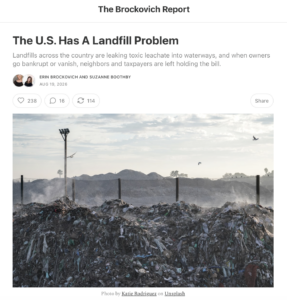
“In New York, the newly released “Leachate Loophole” report from New York River Watch found that landfills sent more than 532 million gallons of leachate to the state’s sewage treatment plants every year from 2019 to 2023. The report also found that 45 of the 75 landfills responsible for it are already inactive or abandoned. These sites are already leaking and routed straight into rivers that supply drinking water to nearly two million New Yorkers. How is this situation okay? The public pays, the water suffers, and the company that made the money is nowhere to be found.”
Environmental groups push for strengthened leachate rules in New York
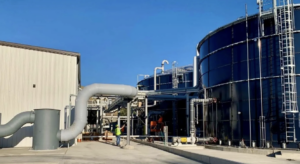
“…New York River Watch argues that the responsibility to manage those contaminants should move upstream to landfill operators, and eventually manufacturers themselves. The question of responsibility for the chemicals also extends to landfill ownership. The report determined that about half of leachate discharged into the state’s waterways was generated at landfills managed by three of the country’s largest private companies: WM, Waste Connections and Casella Waste Systems.”
Waste Dive – 8/17/2026 – Read more…
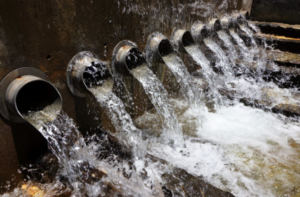
Garbage Water … Or Where Do All Those Chemicals Go: NY River Watch
“Out of sight, out of mind? The solution to pollution is dilution? Handy slogans but when it comes to chemicals in our drinking water and more, the issue is more complicated. Rebecca Martin, Jen Epstein and John Lipscomb join the Green Radio Hour to explain.”
Green Radio Hour, 8/16/26, Listen…
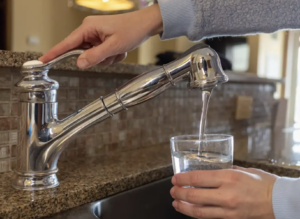
New York’s largest landfill sent 65 million gallons of waste into drinking water sources, report says
“The report centers on public water supplies, naming Lake Ontario and the Niagara River among the waterways tied to drinking water, fisheries, and nearby communities. Rather than staying confined to one site, the report suggests, pollution can move through a network of public treatment plants and waterways well beyond the landfill itself. Rebecca Martin, co-founder and CEO of New York River Watch, said the findings show “how a single landfill can spread contamination risks far beyond its host community.”
The Cool Down – 8/17/26 – Read more…
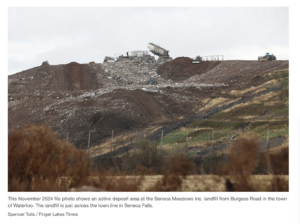
Study says untreated leachate entering drinking water sources
“At a recent webinar on Zoom sponsored by New York River Watch, the Seneca Meadows Inc. landfill on Route 414 is identified as the largest source of landfill leachate in the state, generating an average of more than 65 million gallons annually from 2019-23. According to the report, leachate from Seneca Meadows is sent to seven municipal sewage treatment plants, including facilities that discharge into major drinking water sources. New York River Watch co-founder and CEO Rebecca Martin said this illustrates “how a single landfill can spread contamination risks far beyond its host community.”
Finger Lake Times – 8/12/26 – Read more…
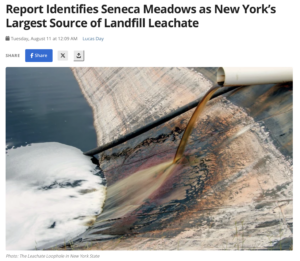
Report Identifies Seneca Meadows as New York’s Largest Source of Landfill Leachate
New York River Watch is calling on Gov. Kathy Hochul and the state Department of Environmental Conservation to require landfills to treat leachate on-site and prohibit untreated or inadequately treated leachate from being discharged through municipal sewage systems. The group said any new regulations should apply to active, inactive and closed landfills that continue to generate leachate.
Finger Lakes Daily News – 8/11/26 – Read more…
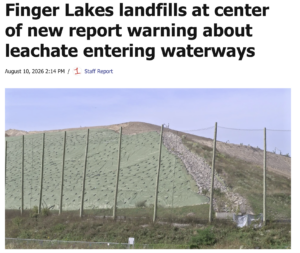
Finger Lakes landfills at center of new report warning about leachate entering waterways
“The report estimates approximately 167 million gallons per year, or 32% of the statewide total, passed through treatment plants discharging directly into portions of waterways officially classified as drinking water sources. Those water systems serve more than 2 million New Yorkers in 151 municipalities. Lake Ontario received the largest estimated amount statewide at 87.5 million gallons annually. That matters directly to the Finger Lakes region because Rochester and numerous communities along the southern Lake Ontario shoreline depend on the lake for public drinking water. The Frank E. Van Lare wastewater treatment plant in Monroe County ranked No. 1 among New York plants accepting landfill leachate, receiving an estimated 73 million gallons annually and discharging into Lake Ontario. High Acres and Mill Seat, both major regional landfills, were among the statewide facilities contributing to the broader leachate system documented by researchers.”
Finger Lakes One – 8/10/26 – Read more…
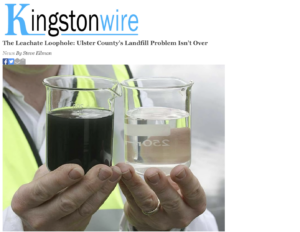
The Leachate Loophole: Ulster County’s Landfill Problem Isn’t Over
“How big an issue is the toxic swill? According to a new, deeply researched, highly detailed report from New York River Watch (NYRW), it’s huge, statewide, poorly monitored and woefully under regulated.”
Kingston Wire – 8/10/26 – Read more…
New report says “toxic garbage water” from landfills getting too close to drinking water
“We accounted for 532 million gallons of leachate across New York State each year from 2019 to 2023,” Jen Epstein, New York River Watch Director of Science, said. “We’re taking this very controlled stream of of waste that we understand to be very risky, and we’re letting it lose back into the water, and we’re shifting the burden of dealing with it to these communities that are using the drinking water. It’s a financial burden, but it’s also a burden of protecting public health, and that’s a big deal.”
CBS 6 News – 8/9/26 – Watch the interview…
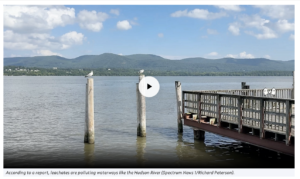
Report shows New York’s failure to prevent waterway pollution
A new statewide report reveals that more than a half billion gallons of poisonous liquid is consistently making its way into the drinking water of nearly two million people. “The findings in this report raise significant concerns for the more than 107,000 residents who rely on the Hudson River as their primary source of drinking water,” said Rhinebeck Mayor Gary Bassett, Chair of the Hudson River Drinking Water Intermunicipal Council (Hudson 7). “Protecting drinking water requires a proactive approach that prevents pollution from reaching the river in the first place, rather than relying solely on treatment after it enters the drinking water supply.”
Mid-Hudson News – 8/7/26 – Read more…
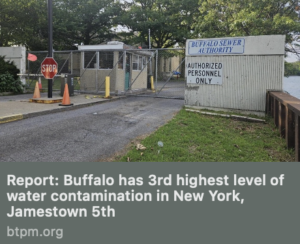
Report: Buffalo has 3rd highest level of water contamination in New York, Jamestown 5th
Landfills can work around permit requirements by sending the garbage water to treatment plants, but those plants are designed to catch human waste, not runoff from landfills, NY River Watch Director of Science Jen Epstein said.
“We have built system that requires landfills to contain their toxic leachate, only to allow that same pollution to be discharged through sewage treatment plants, often into drinking water supplies,” she said.
Buffalo Toronto Public Media – 8/6/26 – Read more…
New report finds overlooked pollution in New York’s waterways
“A critical part of the pollution of New York’s waterways has been overlooked for years, according to a new report by River Watch New York. Report author Jen Epstein says that includes rivers and lakes that serve as drinking water sources. “What you have is that this leachate is being collected in order to protect waters around landfills, but then it’s being disposed of in sewage plants that are dumping it back into waters elsewhere,” she said.”
Spectrum News – 8/6/26 – Watch the interview…
Garbage Juice on the Loose
“The regulations have got to require treatment standards that actually remove contaminants, all of them, before discharging, not some of them”
Politico – 8/6/26 – Read more…

Ulster Trash Agency to support stronger leachate treatment rules.
“Efforts to close a leachate loophole that allows runoff from some landfills to escape treatment regulations will get Ulster County Resource Recovery Agency support. During a Thursday, Nov. 13, board meeting, officials agreed to become part of a movement intended to make sure that contaminants do not reach waterways or get into the ground.”
– Daily Freeman – 11/16/25 – Read more…
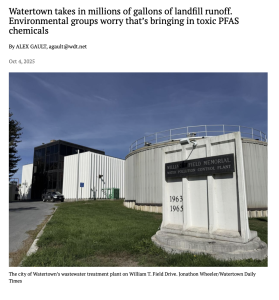
Watertown takes in millions of gallons of landfill runoff. Environmental groups worry that’s bringing in toxic PFAS chemicals.
Each year, thousands of trucks filled with the liquid runoff collected at major landfills across New York are driven into Watertown, taken to the city’s sewage treatment plant, processed and discharged into the Black River. Some environmental advocates are concerned that means thousands of gallons of PFAS, some of which are known to be highly toxic to humans and the environment, are being dumped into the Black River.”
– Watertown Daily Times – 10/4/25 – Read more…

Hurley discusses its leachate problems
“The closed Hurley landfill was declared a state Superfund site. Due to the presence of PFOS and PFOA, Kingston stopped accepting the leachate. No other communities Boms has called will accept it. It will cost the town $10,000 each time the tanks are pumped and sent to the Passaic Valley wastewater treatment center in New Jersey. And it would cost us about $3000 to send a truck there and back, Boms said. He called up the state DEC and said, “Now it’s your problem.”
– Hudson Valley One – 3/10/25 – Read more…

Environmental groups urge DEC to tighten landfill leachate regulations
“The letter to Mahar calls on the DEC to adopt new regulations for on-site treatment and disposal of landfill leachate “to protect public health and drinking water sources.” The letter calls for the DEC to open the rule-making process immediately, with a 90-day public comment period, stressing the urgent need for new regulations to promote public health and the environment on untreated leachate being sent to municipal wastewater treatment plants.”
– Finger Lake Times – 1/28/25 – Read more…

Groups urge New York DEC to require on-site landfill leachate treatment
They say toxic pollutants like PFAS are released into drinking water through the practice of shipping leachate for disposal in wastewater treatment plants ill-equipped to handle the contaminants.
– Waste Dive – 1/23/25 – Read more…

Editorial: Stop Dumping Leachate Toxins in our rivers.
The good news is that leachate by law can’t be released directly into waterways. So in most cases, the polluted water is collected at the landfills and transported to municipal treatment plants, whence it flows untreated into our rivers. Yes, you read that right. The plants don’t have the technology needed to remove the chemicals, and they are not required to. That nonsensical gap in environmental regulations results in 89 million gallons of landfill pollution being dumped in the Hudson and Mohawk rivers annually, even though that pollution threatens human health and both waterways are drinking water sources.
– Times Union – 1/23/25 – Read more…

The Leachate Loophole … New River Pollution Concerns
Just when you thought the Hudson and Mohawk Rivers had endured too much harm from pollutants (PCBs to nuclear waste water, sewage overflow to industrial leakage) a trio of local environmentalists are highlighting another concern: Leachate, the combined liquids that join together in landfills and eventually leak into our waterways. For more definitions and details of the process and solutions, Rebecca Martin, Jen Epstein and John Lipscomb join the Green Radio Hour.
– Green Radio Hour with Jon Bowermaster – 1/20/25 – Listen

Environmental groups call on state to adopt new rules for landfill leachate
A coalition of environmental groups billing itself the “Hudson and Mohawk Rivers Leachate Collaborative” announced Friday that they are pushing the state Department of Environmental Conservation to adopt new regulations for onsite treatment and disposal of landfill leachate.
– Daily Freeman – 1/20/25 – Read more…

How one city allowed millions of gallons of landfill leachate into its water.
Gaps in environmental regulations allow millions of gallons of leachate to be emptied into rivers. Here’s how it happened in Kingston
The agency manages leachate collection from several closed landfills. The leachate discharged through the Kingston Wastewater Treatment Plant comes from four inactive, capped-off landfills in the towns of Ulster, New Paltz and Hurley as well as the Jockey Hill landfill near Bluestone Wild Forest. From 2019 to 2023, UCRRA collected nearly 4.5 million gallons of leachate from these landfills and transported it to the wastewater treatment plant on the Rondout, according to the collaborative’s report.
– Times Union – 1/14/25 – Read more…

Environmental advocates claim drinking water sources in New York at risk from landfill leachate
A new report released to commemorate the 50th anniversary of the Safe Drinking Water Act claims toxic landfill pollution threatens drinking water in 19 New York communities.
Environmentalists say the report entitled “The Threat of Landfill Leachate to Drinking Water in the Hudson and Mohawk Rivers” is based on public records obtained through the Freedom of Information Act.
– WAMC Midday Magazine 1/5/25 – Read more…

BIGGER PICTURE: Living on the edge (of a landfill)
Recently, based on public records obtained through the Freedom of Information Act, a major new report, “The Threat of Landfill Leachate to Drinking Water in the Hudson and Mohawk Rivers,” was released. It revealed regulatory gaps in the way the Department of Environmental Conservation is addressing this problem.
-Finger Lakes Times 12/31/24 – Read more…

Hudson, Mohawk rivers contaminated with landfill runoff, advocates say
Landfills capture what is called leachate and trucks it to water treatment plants. But there are thousands of chemicals contained within that are still released into rivers.
-Times Union 12/18/24 – Read more…
Watchdog highlights leachate’s threat
“A warning about what could be in your drinking water…”
CBS 6 Albany – 12/18/24 – Watch for more…
